
Real Estate Lead Nurturing: How to Stay Top of Mind With Buyers Who Aren’t Ready Yet

Lead nurturing is staying helpful to buyers who aren’t ready to buy yet, so you are the agent they call when they are. Sort long-term leads into three stages (just looking, getting serious, ready soon), send each stage the right mix of matching homes and market context at a pace they chose, and watch for signals like faster replies or tour requests that mean it’s time to call.
Not every buyer lead is ready to tour this weekend. Some are waiting on a lease to end. Some are saving for a down payment. Some are just curious what's out there. The median buyer in NAR's 2025 Profile searched for 10 weeks, and that clock usually doesn't start until they're serious. The months before that are when nurturing happens.
Done well, nurturing feels like a helpful service to the buyer. Done badly, it's a newsletter they never asked for. The difference comes down to relevance and pace.
What lead nurturing means for buyer agents
Lead nurturing is the ongoing, low-pressure contact that keeps you useful to a buyer between "I'm thinking about it" and "let's go see houses." It has three goals:
- Stay relevant. Send things that match what they want, not what you're promoting.
- Stay remembered. When they're ready, your name is the first that comes to mind.
- Spot the shift. Notice when a casual browser becomes a serious buyer, and step up.
It is different from your first 30 days of lead follow-up, which is about making contact and learning what someone wants. Nurturing takes over after that, for anyone who isn't ready to tour yet.
The three nurture stages
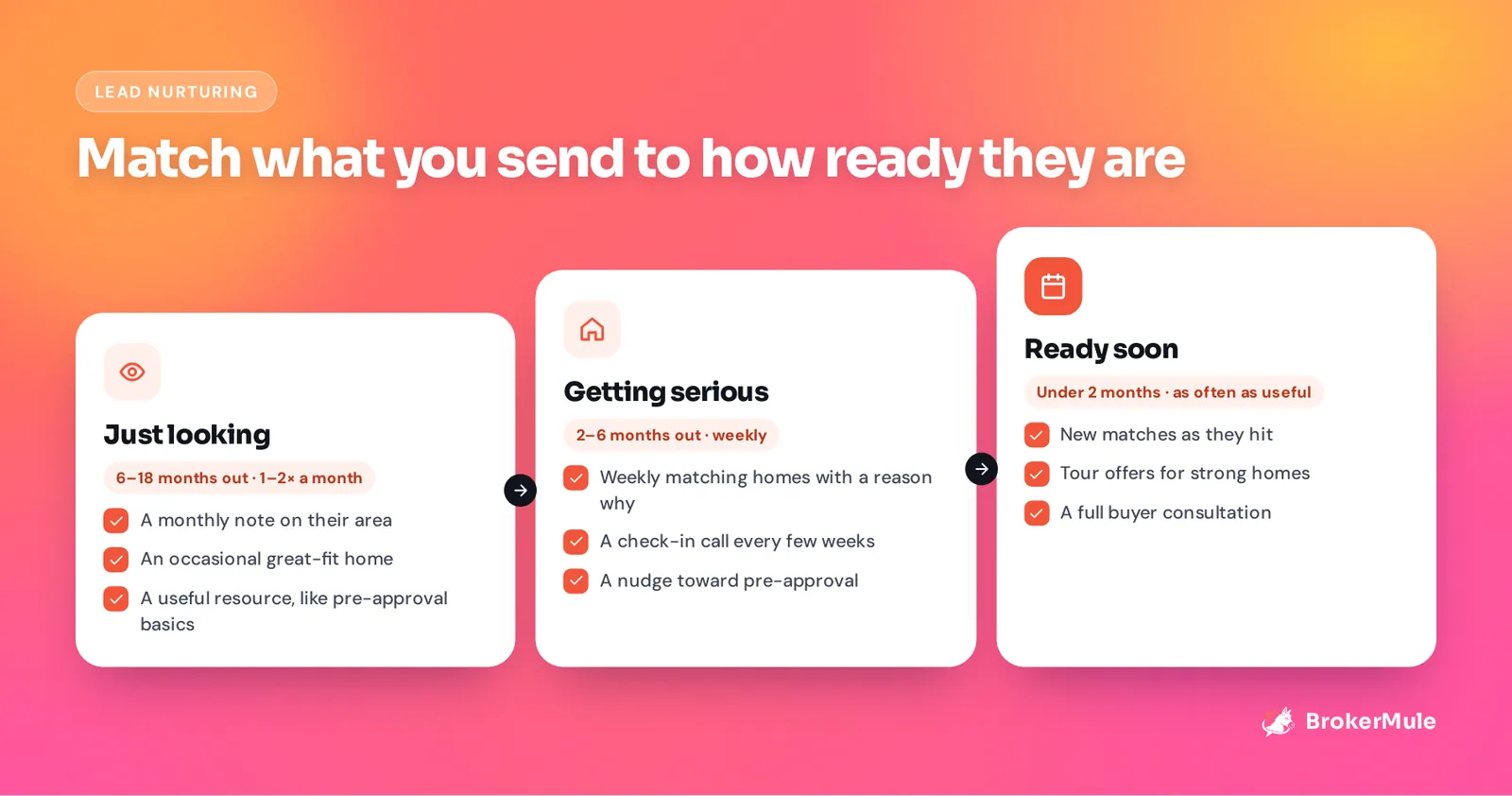
Stage 1: Just looking (6 to 18 months out)
These buyers are curious, not committed. Keep it light:
- A monthly note about their target area: prices, how fast homes are selling, anything new.
- Occasional homes that are a great fit, not every listing.
- One useful resource every month or two, such as what pre-approval involves or how much to budget for closing costs.
Frequency: about once or twice a month.
Stage 2: Getting serious (2 to 6 months out)
They've started looking at homes on their own, might be talking to a lender, and have a clearer idea of what they want:
- Weekly matching homes, ideally with a sentence on why each one fits.
- A check-in call every few weeks to update their search.
- A light nudge toward pre-approval if they haven't done it.
Frequency: about weekly.
Stage 3: Ready soon (under 2 months)
The search is real. Treat them like an active client:
- New matches as they hit, every weekday if they want them.
- Tour offers when a good one comes up. See how to plan a showing tour.
- A buyer consultation if you haven't had one. Use our buyer consultation checklist.
Frequency: as often as they'll find useful. Ask them.
Let the buyer pick the pace
The simplest way to avoid over-messaging is to ask:
People who choose their own frequency stay engaged far longer than people who were signed up for a blast. Our guide on how often to text a buyer covers this in detail.
What to send: content that earns a reply
Ranked roughly by how well it works:
- A specific home that matches their search, with one reason it fits. This is the highest-value message you can send.
- A quick market note for their area. "Three homes under $600k in Fairhaven went under contract in under a week last month."
- Answers to questions they'll have soon. Pre-approval, inspections, how offers work.
- Personal touches. A congratulations when they mention a new job, a note on their move-in anniversary later on.
Avoid generic market reports for the whole country, holiday cards with no personal note, and listings that clearly don't fit.
Use their own portal to keep them engaged
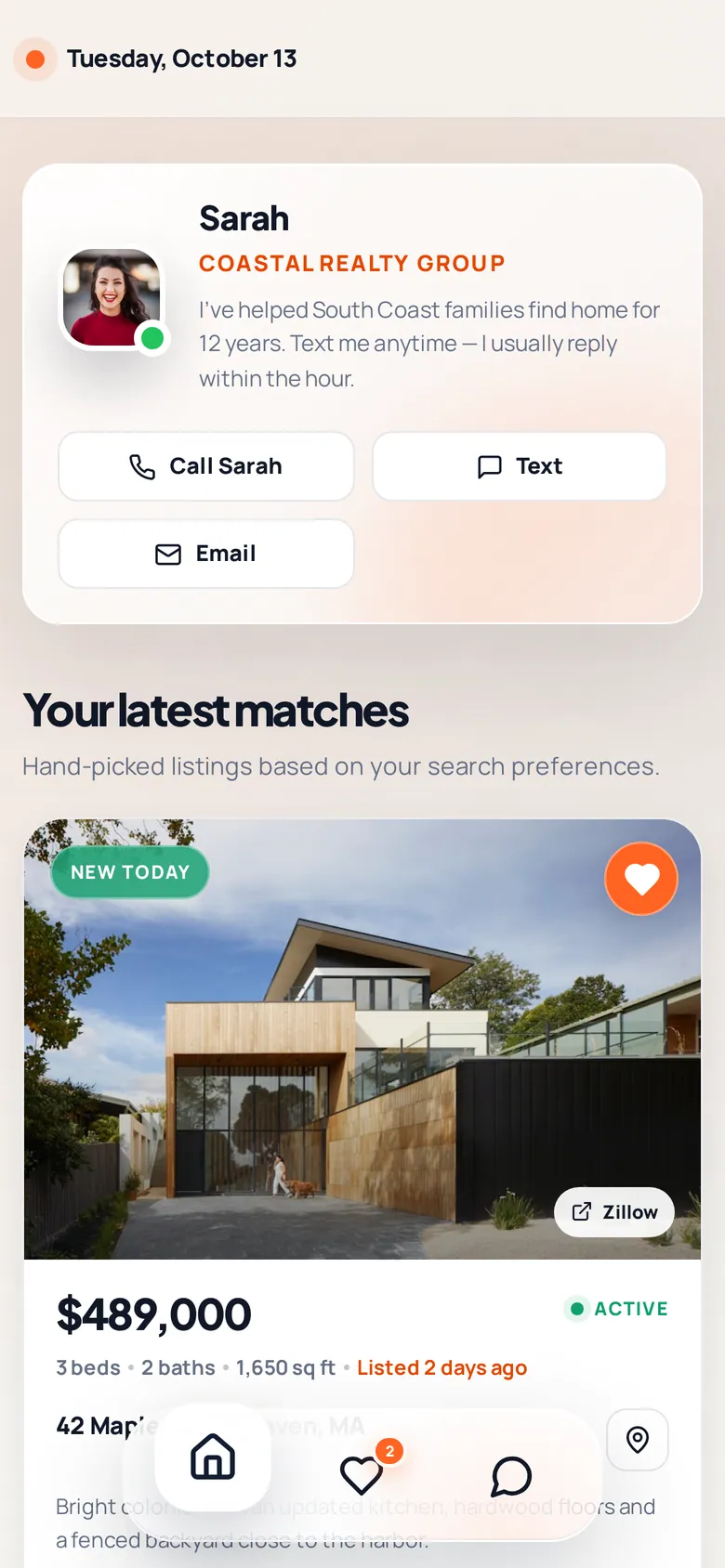
Text alerts get read, but a buyer also needs a place to browse, save favorites and tell you what they think. A personal buyer portal does that. In BrokerMule, every buyer has a link to their own branded page showing homes that match their search. They can heart homes, leave feedback and request tours, and you see all of it. Learn more in what is a real estate client portal and the client portal guide.
Spotting when a lead is ready
Watch for these signals and act on them the same day:
- Replies come faster or more often
- They save or heart several homes in a short period
- They ask about a specific address, a neighborhood or a school
- They mention a lender, pre-approval or a lease end date
- They request a tour
When you see two or more, call. Then move them to stage 3, and on your pipeline board, to an active stage. Our real estate pipeline stages article shows a simple way to organize this.
Make nurturing sustainable
Nurturing fails when it depends on you remembering to send things to 40 people. Build a system:
- Automate matching homes. Each buyer's search runs on its own schedule, and they get a personal text about the best new match. That covers the most valuable nurture message without any daily effort. See how AI listing texts work.
- Batch the monthly touches. A short monthly email to all your stage 1 leads takes 20 minutes. See real estate newsletter ideas.
- Pause who isn't engaging. If someone hasn't opened anything in months, pause texts and move them to a monthly email. You can always restart. Learn how in managing clients.
Do it in BrokerMule
All guides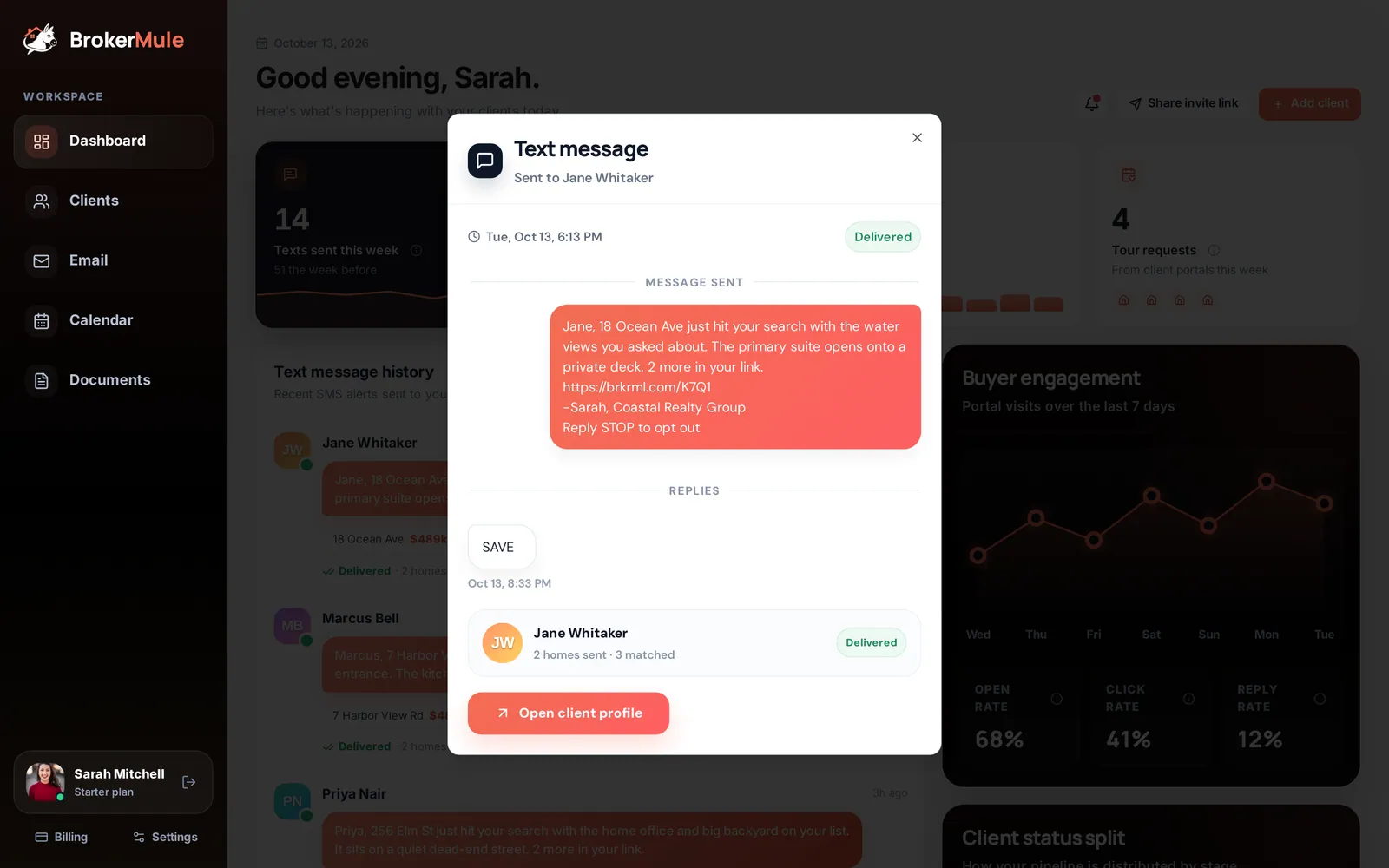 AI listing textsWhat happens behind every automated text: the daily search, how the AI writes in your voice, reply keywords, opt-outs and where to see results.The client portalThe branded, phone-friendly page every listing text links to: matches, favorites, tour requests, feedback and chat with you.
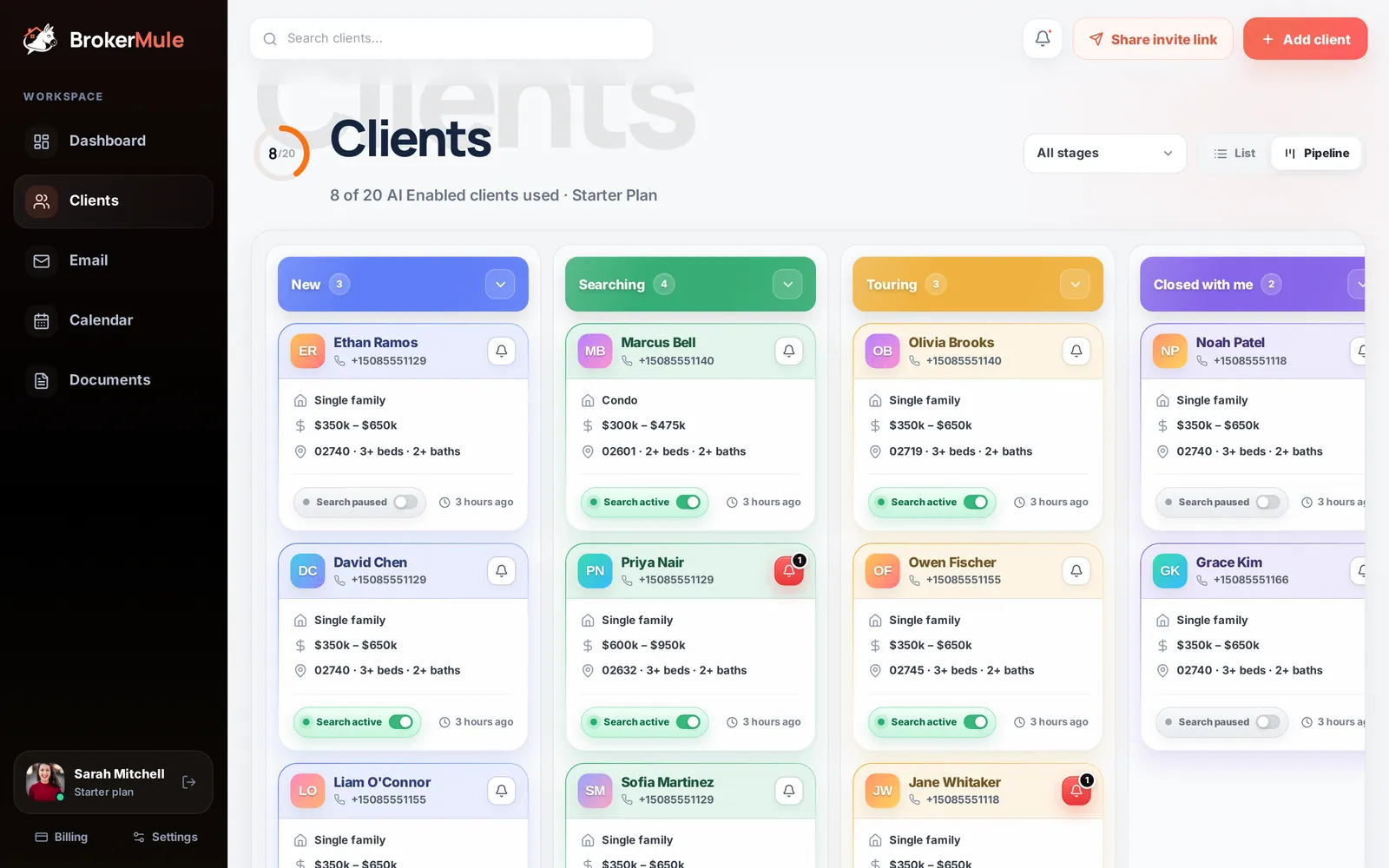 Managing clientsUse the pipeline board and list view to organize buyers by stage, search and filter your book, and turn texts on or off per client.
Frequently asked questions
What is lead nurturing in real estate?
It is the ongoing, helpful contact you keep with buyers who are not ready to buy yet, so they stay engaged and choose you when they are ready.
How long should you nurture a real estate lead?
As long as they are still planning to buy. Many buyers take 6 to 18 months from first contact to purchase. Stop only if they ask you to or buy with someone else.
How often should I contact long-term leads?
Once or twice a month for buyers who are just looking, weekly for buyers getting serious, and as often as useful once they are ready. Asking the buyer is the best way to decide.
What is the best content for nurturing buyer leads?
Homes that match their specific search, with a short reason each one fits. Local market notes and answers to upcoming questions come next.
Sources
Competitor pricing and features change often. These were the references used when this page was last reviewed — verify anything critical before making a purchase decision.
Keep reading
 Lead follow-upHow to Follow Up With Real Estate Leads: A 30-Day Plan That Gets Replies
A day-by-day plan for the first 30 days with a new buyer lead: what to send, when, and on which channel.
 Lead follow-upReal Estate Drip Campaign Examples: Text and Email Sequences That Don’t Feel Automated
Three ready-to-use drip sequences for buyers, with the exact texts and emails, and how to keep them personal.
 CRM & textingHow Often Should a Realtor Text a Buyer Without Being Annoying?
There is no universal texting frequency. Match cadence to the buyer's urgency and the usefulness of the message — plus a relevance threshold to apply before every send.