
Buyer Representation Agreements After the NAR Settlement: What Agents Need to Know

Since August 17, 2024, agents who participate in an MLS must have a written agreement with a buyer before touring a home with them, in person or live virtually. The agreement must state the agent’s compensation as a specific, objective amount or rate, bar the agent from receiving more than that amount, and say plainly that commissions are fully negotiable and not set by law. State laws and brokerage forms add their own requirements, so use your broker’s approved form.
This article explains general industry practice and isn't legal advice. Requirements vary by state, MLS and brokerage. Check with your broker or a real estate attorney before changing how you use buyer agreements.
For years, many buyers worked with an agent on a handshake. That changed with the National Association of REALTORS® settlement. Since August 17, 2024, written buyer agreements are required before touring for agents who participate in an MLS. Agents who explain the agreement clearly turn it into a trust-builder. Agents who spring it on buyers at the front door of a showing create friction.
When you need a written buyer agreement
According to NAR's guidance on the settlement, MLS participants working with a buyer must enter into a written agreement before touring a home with that buyer. That includes:
- In-person tours of a home
- Live virtual tours, where you walk the buyer through a home in real time
It does not apply when a buyer is simply:
- Talking with you at an open house
- Asking about your services
- Getting general information before they decide to work with you
In practice, that means the agreement belongs in your first real meeting, usually the buyer consultation. Our buyer consultation checklist shows where it fits.
What the agreement must include
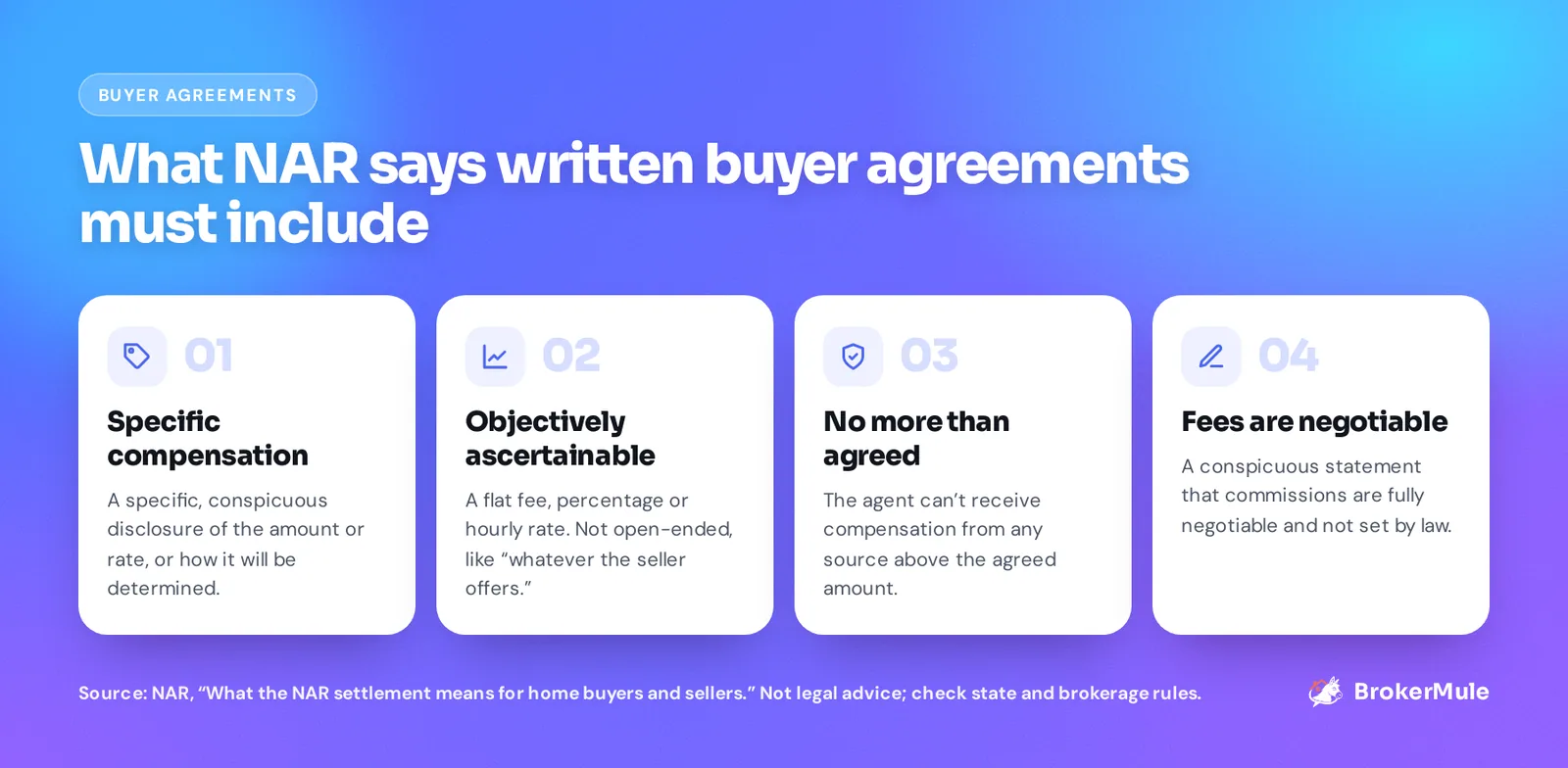
NAR's guidance says written buyer agreements must include:
- A specific, conspicuous disclosure of compensation. The amount or rate the agent will receive, or how it will be determined.
- An objectively ascertainable amount. A flat fee, a percentage or an hourly rate is fine. Open-ended terms like "whatever the seller offers" are not.
- A cap on compensation. The agent can't receive more from any source than the amount in the agreement.
- A negotiability statement. A conspicuous statement that broker fees and commissions are fully negotiable and not set by law.
Your state and brokerage may require more, such as agency disclosures, the term of the agreement or how it can be ended.
Other terms buyers will ask about
Even when they aren't required, clear answers to these questions prevent problems later:
- How long does it last? A shorter term with an easy renewal can make buyers more comfortable.
- Is it exclusive? Can they work with other agents during the term?
- What if a seller pays my agent? Explain how seller-paid compensation is credited against what's owed under the agreement.
- How do we end it? Spell out how either side can cancel, and any obligations after cancellation.
- What exactly will you do? List your services: searches, tours, offer strategy, negotiation, coordinating inspections and closing.
How to explain it to buyers
Buyers respond well when the agreement is framed as clarity, not paperwork:
Then go through it line by line. Answer questions directly. If a buyer wants to start with a single showing, some brokerages offer a short-term or single-property agreement, so ask your broker what's available.
A simple agreement workflow
- Prepare the agreement before the consultation, with the client's name and your compensation filled in.
- Walk through it together during the consultation.
- Sign electronically so nobody has to print, scan or chase a signature. Electronic signatures are generally valid for real estate contracts under the federal ESIGN Act and state laws based on the UETA, though some documents and local practices have exceptions.
- Store the signed copy with the client's record so you can find it in seconds.
- Book the first tours right after. See how to plan a showing tour.
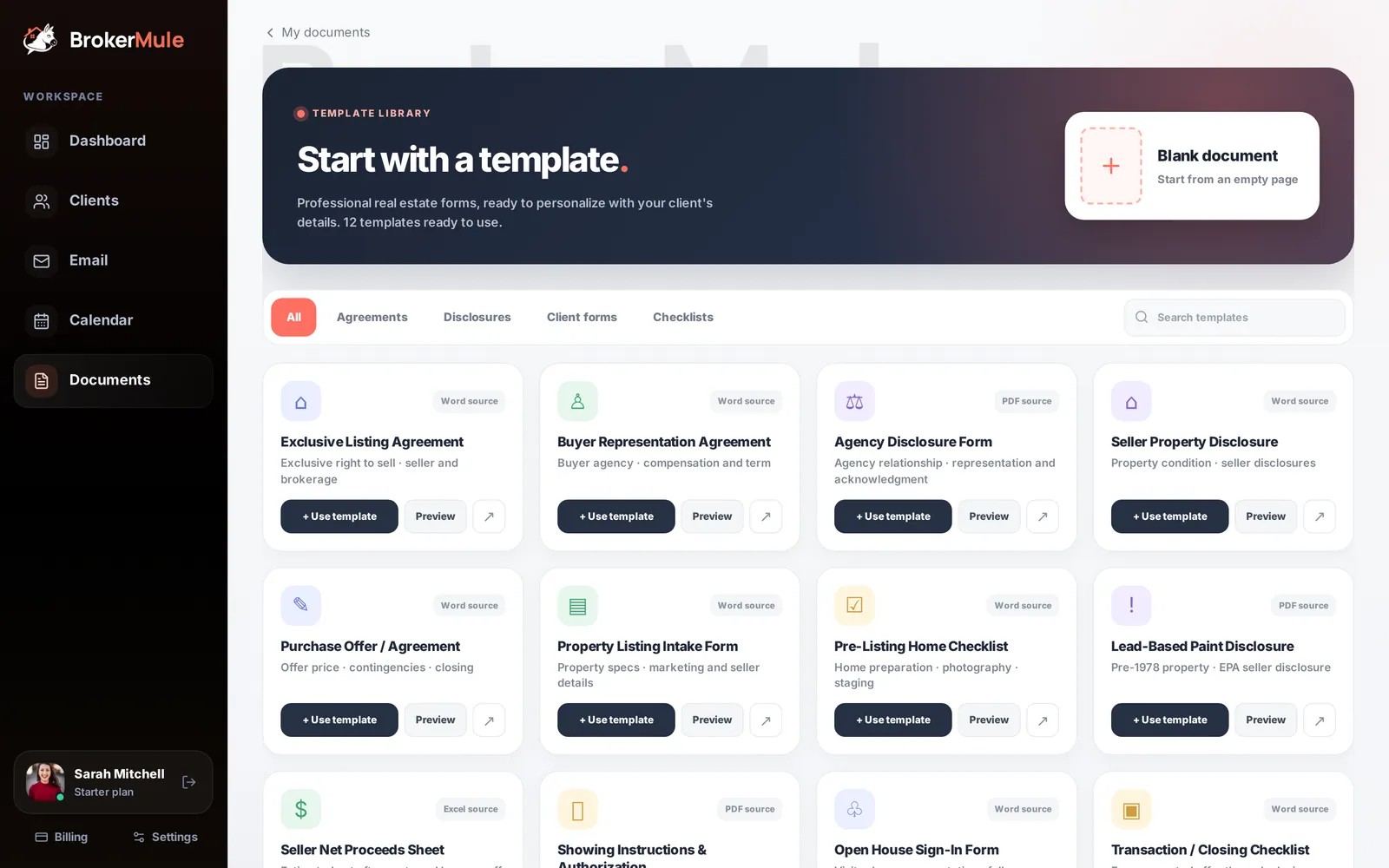
In BrokerMule, the Buyer Representation Agreement template fills in the client's name, phone and email automatically. Add your letterhead, edit the terms to match your broker's requirements, and click Email to request a signature. The signed PDF is saved to your documents. See documents and e-signatures.
Common mistakes to avoid
- Waiting until the first showing. You'll need it before the tour, so sign it at the consultation.
- Vague compensation. "To be determined" or "per the listing" won't meet the requirement.
- Rushing the conversation. A buyer who understands the agreement trusts you more.
- Using an outdated form. Brokerages updated their forms after the settlement. Use the current one.
- Losing track of expiration dates. Add the end date to your calendar so you can renew in time.
Do it in BrokerMule
All guidesDocuments & e-signaturesStart from 12 real estate templates, brand and autofill them, then download a PDF or email it for an online signature.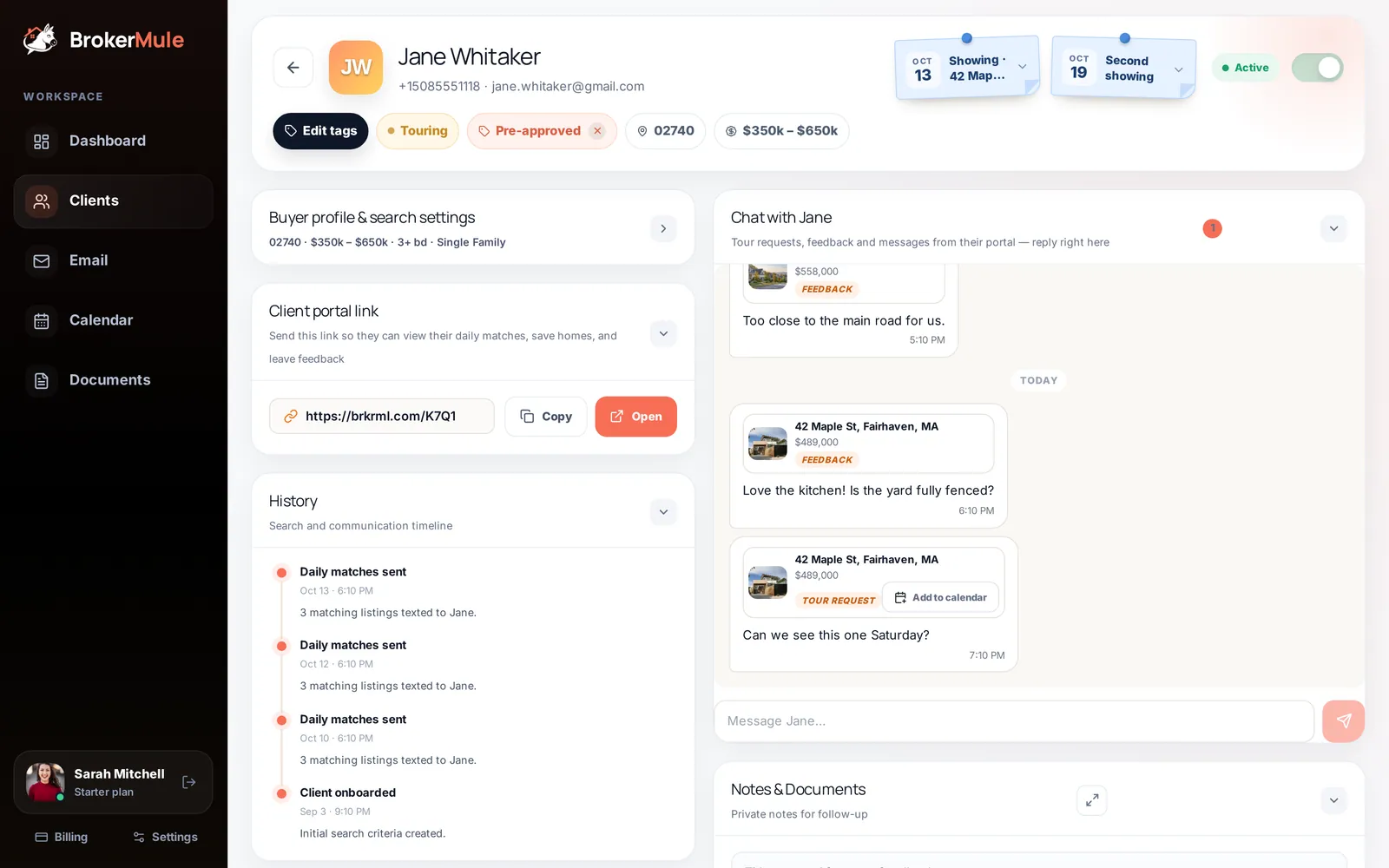 The client pageA tour of every section on a buyer’s page, from live chat and private notes to saved homes, tour requests and the full text history.
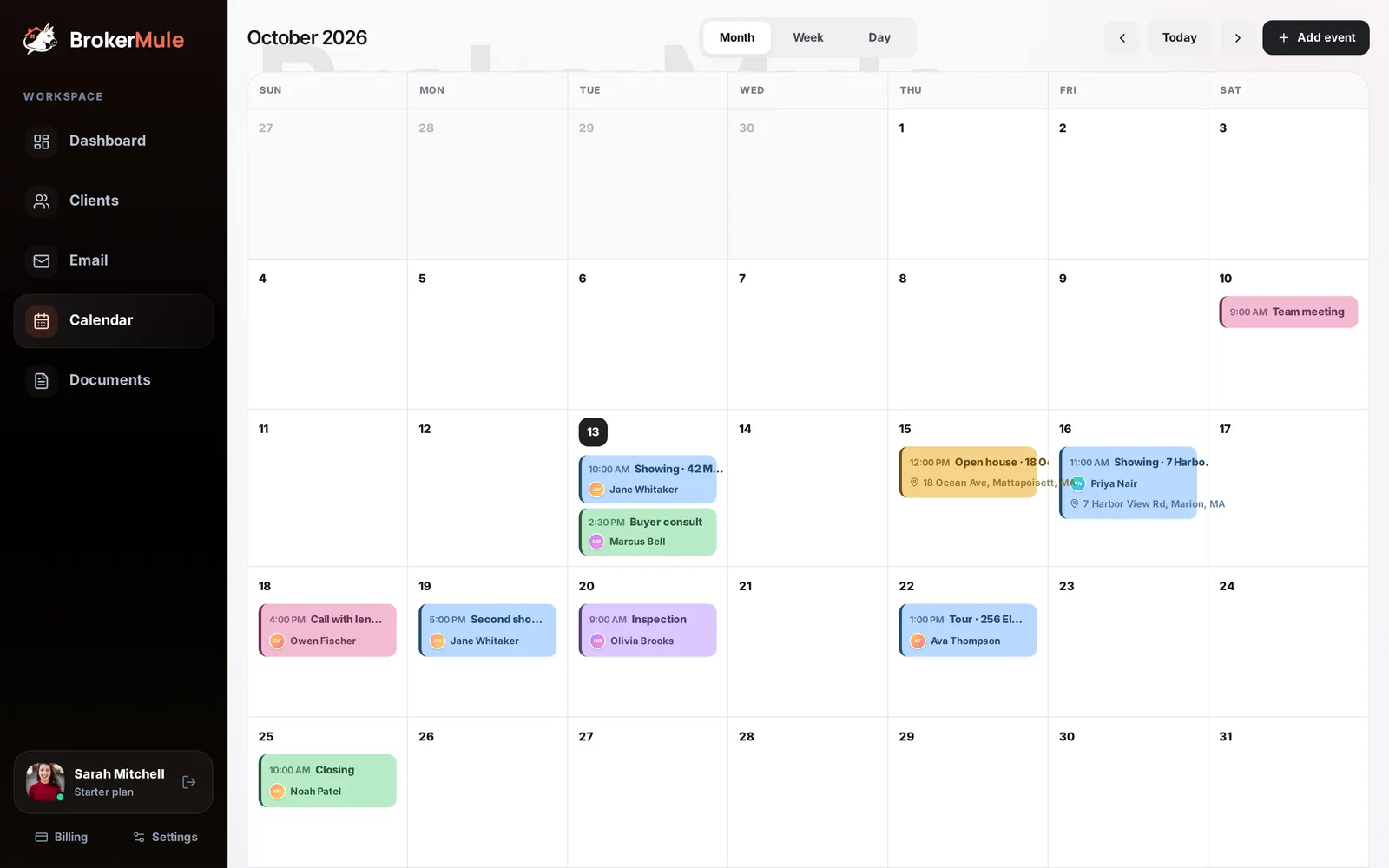 CalendarMonth, week and day views; double-click to add an event; link it to a client and property; book tour requests in one click.
Frequently asked questions
Is a buyer representation agreement required?
For agents who participate in an MLS, a written agreement is required before touring a home with a buyer, under the practice changes that took effect August 17, 2024. Some states have their own requirements too.
Do I need a buyer agreement for an open house?
No. Talking with a buyer at an open house or answering questions about your services does not require a written agreement. Touring homes together does.
What must a buyer agreement include?
A specific, objectively ascertainable amount or rate of compensation, a term that the agent cannot receive more than that amount, and a conspicuous statement that commissions are fully negotiable and not set by law.
Can a buyer agreement be signed electronically?
Generally yes. Electronic signatures are broadly valid for real estate contracts under the federal ESIGN Act and state laws based on the UETA, with some exceptions. Check local requirements.
Can buyers negotiate the compensation in a buyer agreement?
Yes. The agreement itself must state that broker fees and commissions are fully negotiable and not set by law.
Sources
Competitor pricing and features change often. These were the references used when this page was last reviewed — verify anything critical before making a purchase decision.
Keep reading
 Working with buyersBuyer Consultation Checklist: 25 Questions and Steps for Your First Meeting
What to prepare, the questions to ask, and how to turn a first meeting into a buyer who’s ready to tour.
 Working with buyersHow to Plan a Showing Tour for Buyers: Scheduling, Routes and What to Do at Each Home
How many homes to book, how to schedule and route them, and how to make every stop count.
 Lead follow-upOpen House Follow-Up: Texts, Emails and a 14-Day Plan to Turn Visitors Into Clients
What to collect at the door, a 14-day plan, and copy-ready texts and emails for every visitor type.