
Real Estate SMS Compliance: A Practical Guide for Agents Using Automated Texting

This guide is a practical starting point, not legal advice. The TCPA, FCC rules, FTC telemarketing rules, carrier policies and state laws can overlap, and requirements change. If your business sends automated or marketing texts at volume, have qualified counsel review the exact consent language and workflow you use before you scale.
Why this matters
Texting is one of the easiest ways for a real estate agent to create a fast client conversation, and one of the easiest communication channels to misuse at scale.
This guide is a practical starting point, not legal advice. The Telephone Consumer Protection Act, FCC rules, FTC telemarketing rules, carrier policies and state laws can overlap. If your business sends automated or marketing texts at volume, have qualified counsel review the exact consent language and workflow you use.
1. Treat consent as a record, not a checkbox
Do not rely on a memory that a lead "probably opted in." Keep evidence of how and when the person provided the phone number and what they agreed to receive.
The level of consent required can depend on the technology and the purpose of the message. Marketing automation deserves considerably more caution than a one-time reply to a customer's direct request.
Practically, that means storing the source, the date, and the language shown at the moment of signup — not just a boolean flag.
2. Identify the sender
Messages should make it clear who is contacting the consumer. A new lead should not have to guess which agent or company is behind an automated number.
Clear identification is also simply better client experience. An unidentified text from an unknown number gets ignored or reported.
3. Make opting out easy
Build a process that recognizes common opt-out requests and stops future automated marketing messages. Do not make a consumer argue with an agent to be removed.
FCC rules and orders around revocation have evolved, so your vendor and legal review should reflect current requirements rather than an old blog post. Recognizing only the exact word "STOP" is not a safe assumption — people write "stop texting me," "unsubscribe," "remove me."
4. Maintain internal suppression lists
If someone asks not to be contacted, your business needs a reliable way to prevent that number from being re-added to another campaign later.
That means opt-out data must survive imports, agent changes and campaign changes. This is where most real-world failures happen: someone opts out, the database is later re-imported from an older export, and the automation starts again.
If you are migrating CRMs, confirming that your suppression list transfers is not optional.
5. Consider Do Not Call obligations
The FTC's Telemarketing Sales Rule includes National Do Not Call and entity-specific do-not-call requirements for covered telemarketing. The FTC advises sellers and telemarketers to maintain procedures, train staff, keep internal lists and use current Registry data where the rule applies.
Real estate businesses should determine which federal and state calling and texting rules apply to their specific outreach model. This is a question for counsel, not for a software vendor's marketing page.
6. Separate requested information from marketing nurture
A consumer asking for information about one property is not the same scenario as enrolling that person into an ongoing automated marketing campaign.
Design your forms and automations so the scope of the communication is clear. If your signup form implies a single property inquiry, do not treat it as consent for a daily alert series.
7. Keep automation controllable
Agents should be able to pause a client, change frequency and take over the conversation at any point. A system that keeps sending because a campaign is difficult to stop creates both relationship and compliance risk.
BrokerMule, for example, lets the agent pause or change the schedule for an individual buyer rather than only stopping everything at once.
8. Review vendors, not just your own copy
Ask your CRM or SMS provider how they handle:
- Opt-out detection and honouring
- Number registration (such as 10DLC)
- Delivery and failure reporting
- Suppression lists and whether they survive imports
- Message logs and consent records
- Export of both, if you leave
Software can support compliance, but it does not transfer legal responsibility away from the business using it. That distinction matters if something goes wrong.
A practical pre-send checklist
- Do I know where this number came from?
- Is the person expecting this category of message?
- Is the sender clearly identified?
- Is there an easy way to opt out?
- Will an opt-out suppress future automated messages, including after a re-import?
- Can I produce consent and message records later if asked?
- Have I reviewed applicable state requirements?
If you cannot answer those questions, fix the workflow before increasing volume.
Two things never to do
Do not import a purchased phone list and start automated texting because the software allows it. Capability is not permission.
Do not treat a single property inquiry as consent for an ongoing marketing campaign.
Good compliance and good client experience point the same way here: make communication wanted. For the operational side, see how to automatically text new listings to buyers and how often should a realtor text a buyer.
Keep learning
Go deeper with real estate drip campaign examples, open house follow-up and the adding clients guide, which shows where consent is recorded.
Do it in BrokerMule
All guides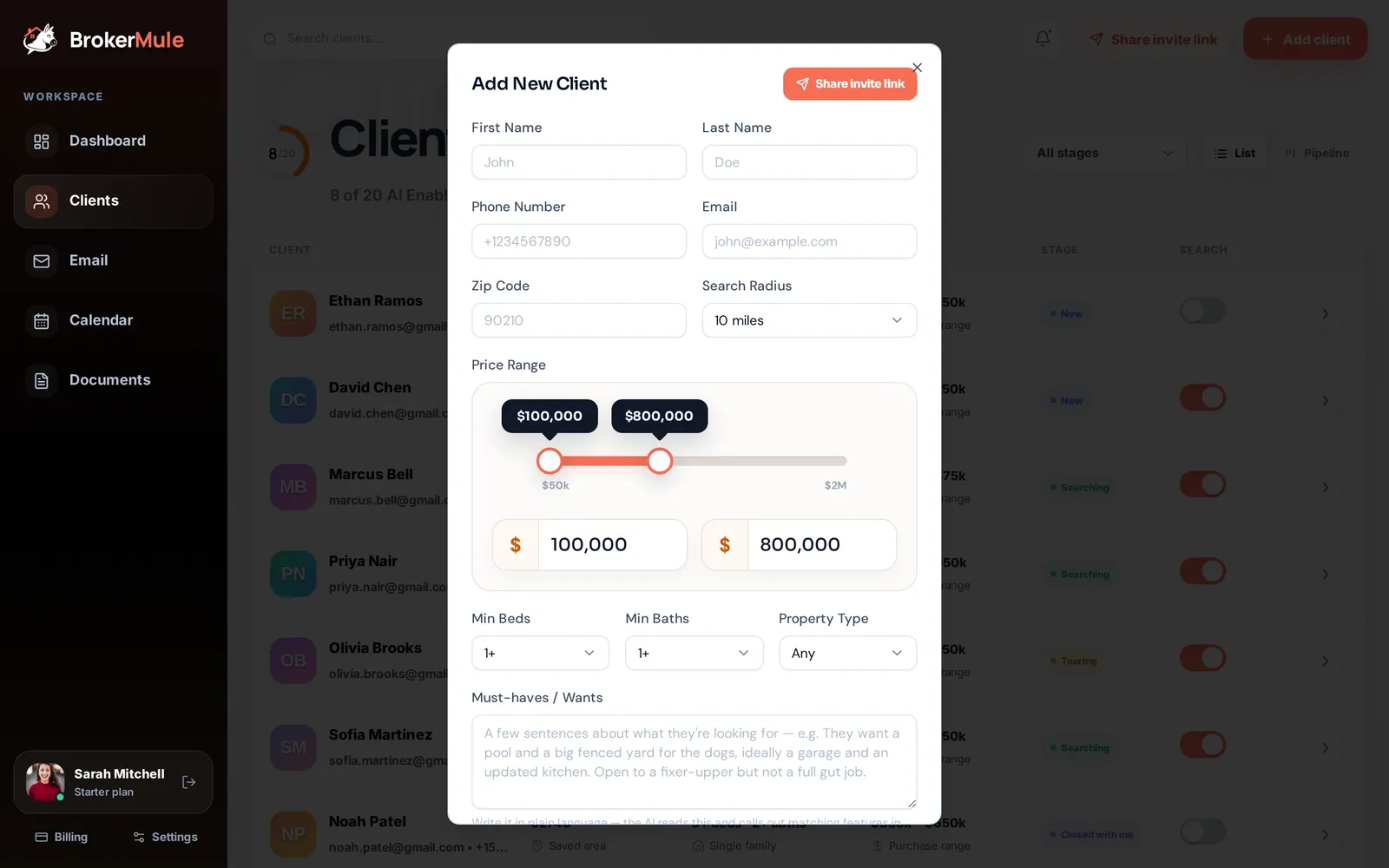 Adding clientsEvery field on the Add client form, what the AI does with it, and how to activate texting with the right consent.
 Invite link & sign-upsShare one personal link. Buyers fill in their own search and consent to texts, and you decide when to switch them on.
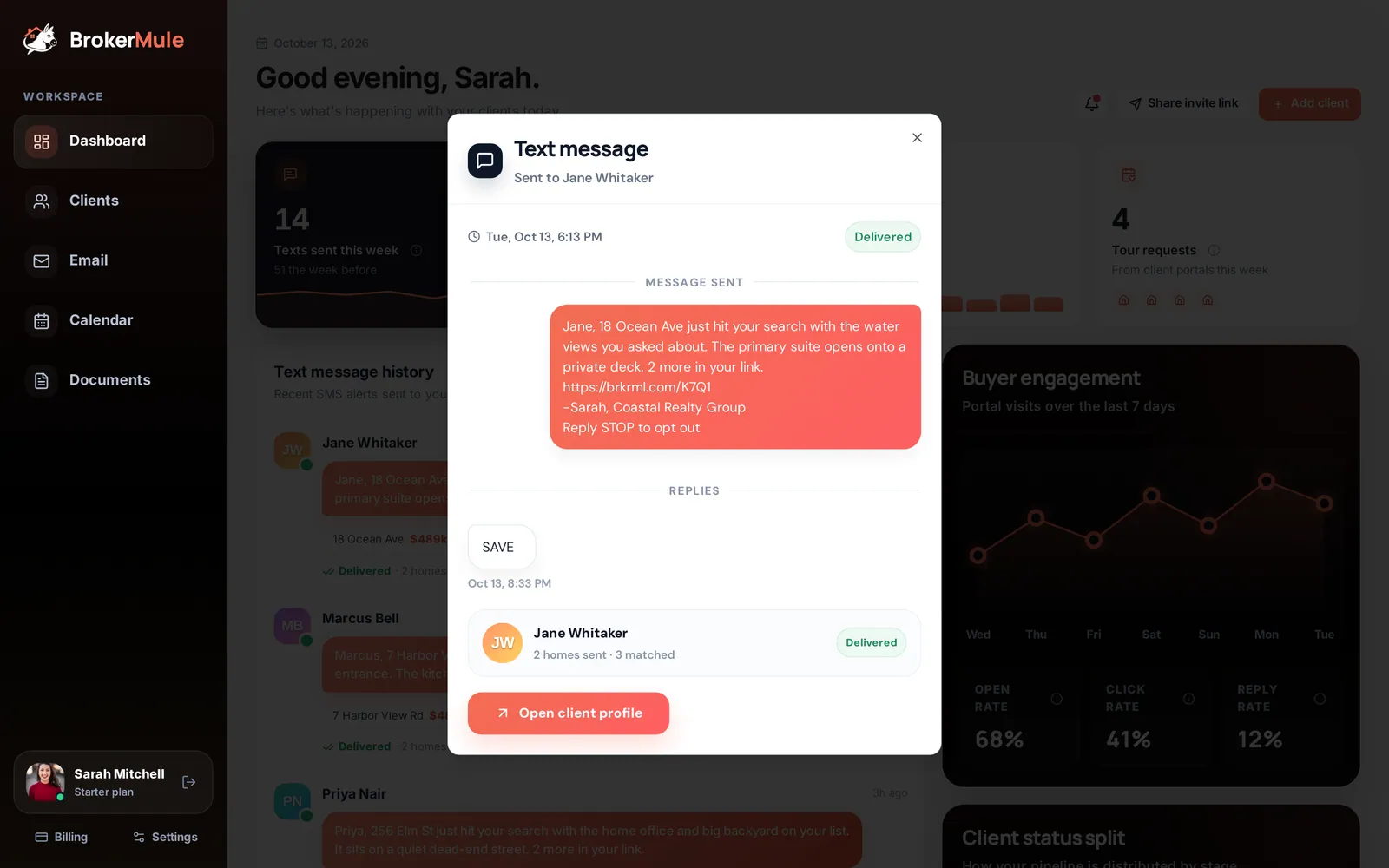 AI listing textsWhat happens behind every automated text: the daily search, how the AI writes in your voice, reply keywords, opt-outs and where to see results.
Frequently asked questions
Is automated real estate texting legal?
Automated marketing texts are subject to consent and opt-out requirements under the TCPA, FCC rules, FTC telemarketing rules, carrier policies and state laws. It can be done lawfully, but the requirements are specific and change over time, so have qualified counsel review your workflow.
What consent do I need to text a real estate lead?
The level of consent required can depend on the technology used and the purpose of the message, and marketing automation demands more caution than replying to a direct inquiry. Keep a record of how and when the number was provided and what the person agreed to receive.
How should I handle text opt-outs?
Recognize common opt-out phrasing rather than only the exact word "STOP", stop automated marketing messages promptly, and store the suppression so the number cannot be re-added by a later import or a new campaign.
Can I text a purchased phone list?
Do not import a purchased list and start automated texting simply because the software permits it. Capability is not permission, and purchased lists rarely come with the consent records you would need to rely on.
Does my CRM handle compliance for me?
No. Software can support compliance through opt-out handling, number registration, suppression lists and message logs, but legal responsibility stays with the business sending the messages.
Sources
Competitor pricing and features change often. These were the references used when this page was last reviewed — verify anything critical before making a purchase decision.
Keep reading
 CRM & textingHow to Automatically Text New Listings to Your Real Estate Buyers
A six-step workflow for automating listing texts that buyers actually answer — capturing real criteria, defining "new", writing around the match, and staying compliant.
 CRM & textingHow Often Should a Realtor Text a Buyer Without Being Annoying?
There is no universal texting frequency. Match cadence to the buyer's urgency and the usefulness of the message — plus a relevance threshold to apply before every send.
 CRM & textingSMS vs Email Property Alerts for Real Estate Buyers: When to Use Each
Email carries detail and volume. Text creates a short, immediate conversation. Use email as the inventory layer and SMS as the curated layer — here is how to split them.